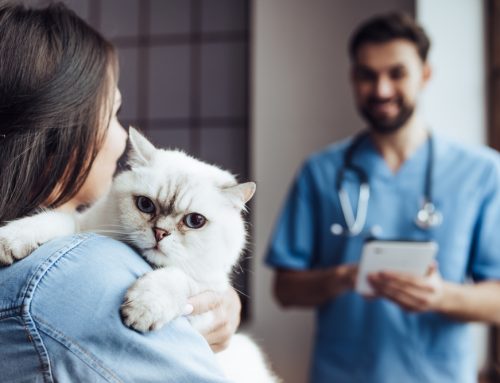

Pets cannot tell us when something hurts, and many instinctively hide discomfort. Pain may appear as a small change in movement, appetite, posture, or behavior rather than obvious crying or limping.
September is Animal Pain Awareness Month, making it a good time to learn the signs your pet may be in pain.
Why Pet Pain Can Be Easy to Miss
A dog may still wag their tail while uncomfortable, and a cat may continue eating despite dental or joint pain. Chronic pain can develop gradually, making stiffness or reduced activity seem like normal aging.
Any change from your pet’s usual behavior deserves attention.
Signs of Pain in Dogs
Signs of pain in dogs may include:
- Limping, stiffness, trembling, or difficulty getting up
- Avoiding stairs, jumping, playing, or going for walks
- Panting at rest, pacing, or difficulty getting comfortable
- Whining, yelping, or becoming unusually quiet
- Repeatedly licking or chewing one area
- Changes in appetite, sleep, or social behavior
- Flinching, irritability, or reacting when touched
A dog does not need to cry or refuse to walk to be in pain. Small changes in mobility or personality may be the first warning signs.
Signs of Pain in Cats
Cats are especially skilled at hiding discomfort! Signs of pain in cats may include:
- Hiding or avoiding interaction
- Jumping less or hesitating before jumping
- Moving stiffly or struggling to enter the litter box
- Decreased grooming, overgrooming, or a messy coat
- Eating less, dropping food, or chewing differently
- Changes in litter box habits
- Sleeping more or resting in an unusual position
- Flattened ears, narrowed eyes, growling, or resisting touch
If you notice unusual movements or behavior at home, take a photo or short video and bring it to your cat’s veterinary appointment. This can give the veterinarian helpful context during the examination.
When to Contact Your Veterinarian
Contact your veterinarian if you notice a new or persistent change in your pet’s movement, appetite, grooming, sleep, bathroom habits, or behavior.
Seek urgent veterinary care after major trauma or if your pet has difficulty breathing, cannot stand or walk, repeatedly cries out, suddenly becomes weak, or collapses.
Never give your pet pain medication intended for people unless directed by a veterinarian. Many common human medications can be dangerous or even life-threatening to pets.
Helping Your Pet Feel Better
Your veterinarian will first work to identify what is causing the pain. An examination, bloodwork, imaging, dental evaluation, or other testing may be recommended.
Treatment depends on your pet’s individual needs and may include medication, rehabilitation, weight management, dental care, surgery, or changes around the home.
Oak Creek Veterinary Care does have a veterinarian, Dr. Burguete, who provides acupuncture and may prescribe herbal medications when appropriate. These options are used alongside conventional veterinary treatment as part of an individualized care plan.
If you have noticed changes in your pet’s movement, behavior, or daily routine, the team at Oak Creek Veterinary Care is here to help identify the cause and help them feel more comfortable.
Schedule your pet’s appointment online → https://oakcreekvet.getoliver.com
Prefer to call or text?
Reach us at 414-301-9113.