

As spring settles into Southeast Wisconsin, warmer temperatures bring more time outdoors for both pets and their owners. Unfortunately, it also marks the return of ticks. While many people associate ticks with wooded hiking trails, they’re just as common in backyards, neighborhood parks, and everyday walking routes.
Knowing how to check your dog for ticks is an important part of pet care in Wisconsin, especially during spring and summer when tick activity increases.
Even a quick walk around the block can expose your dog to ticks.
In this region, we most commonly see the Blacklegged Tick, the American Dog Tick, and the Lone Star Tick. While they vary slightly in appearance, all ticks attach to animals to feed, and some can transmit disease in the process.
Ticks are more active than many pet owners realize and they don’t just live in the woods!
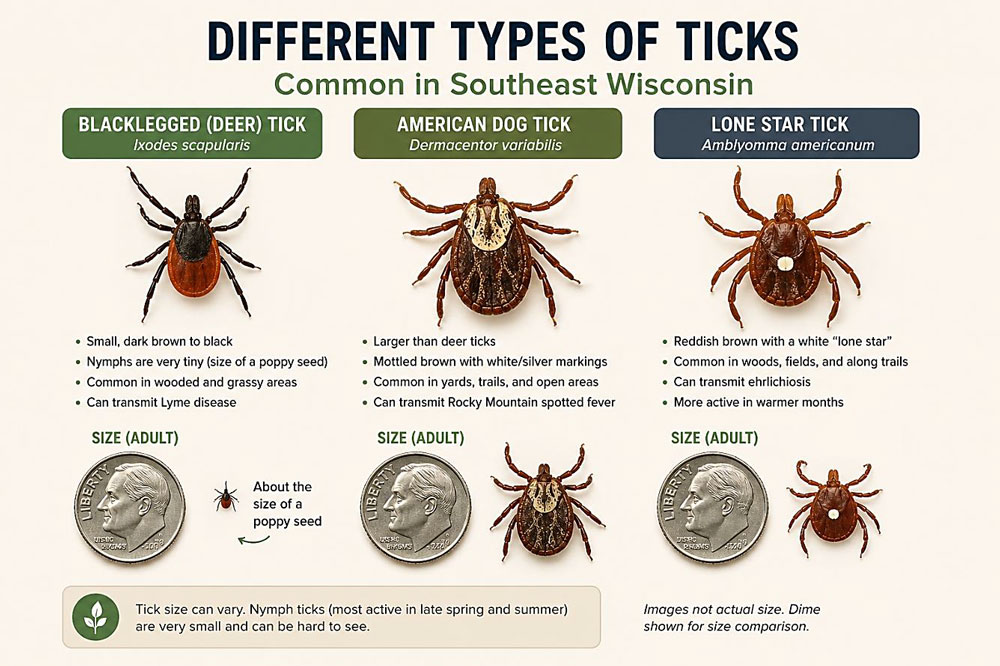
Where Ticks Are Commonly Found
Ticks don’t jump or fly. Instead, they wait on grass, brush, or low vegetation and latch onto a passing animal. Because of this, exposure often happens in places people don’t expect.
Common tick habitats include:
- Tall grass and overgrown areas
- Wooded trails and forest edges
- Leaf litter and brush piles
- Fence lines and shaded landscaping
- Local parks and neighborhood walking paths
Even well-maintained yards can still pose a risk, especially during peak season.
How to Check Your Dog for Ticks (Step-by-Step)
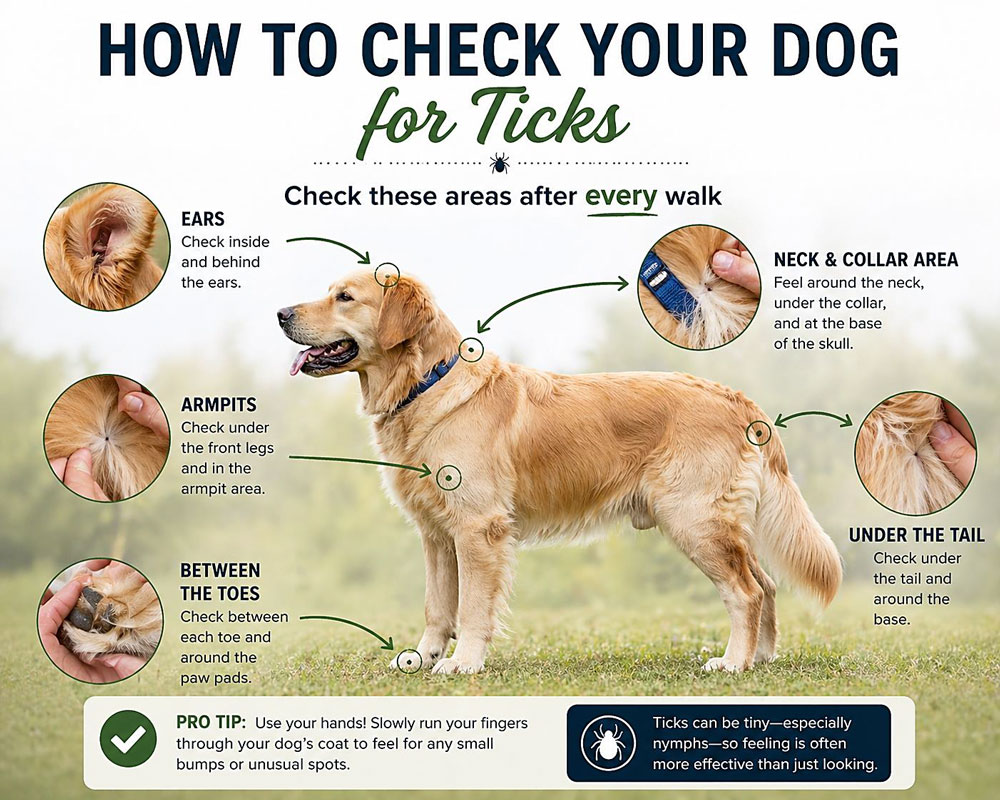
Routine checks are one of the simplest ways to protect your pet. After spending time outdoors, take a minute to slowly run your hands over your dog’s body. Ticks can be very small, so they’re often easier to feel than see.
Pay close attention to areas where ticks tend to hide:
- Inside and behind the ears
- Around the neck and under the collar
- Between the toes
- Under the front legs (armpits)
- Around the eyes and lips
- Under the tail
These spots provide warmth and protection, making them ideal hiding places.
What to Look (and Feel) For
A tick may initially feel like a small bump on your dog’s skin. As it feeds, it becomes larger and more noticeable, sometimes resembling a skin tag or small lump.
Ticks go through different life stages, from tiny larva and nymph stages to fully grown adults, and can be difficult to spot early on. Because of this, it’s important to check regularly rather than relying on visual signs alone.
What to Do If You Find a Tick
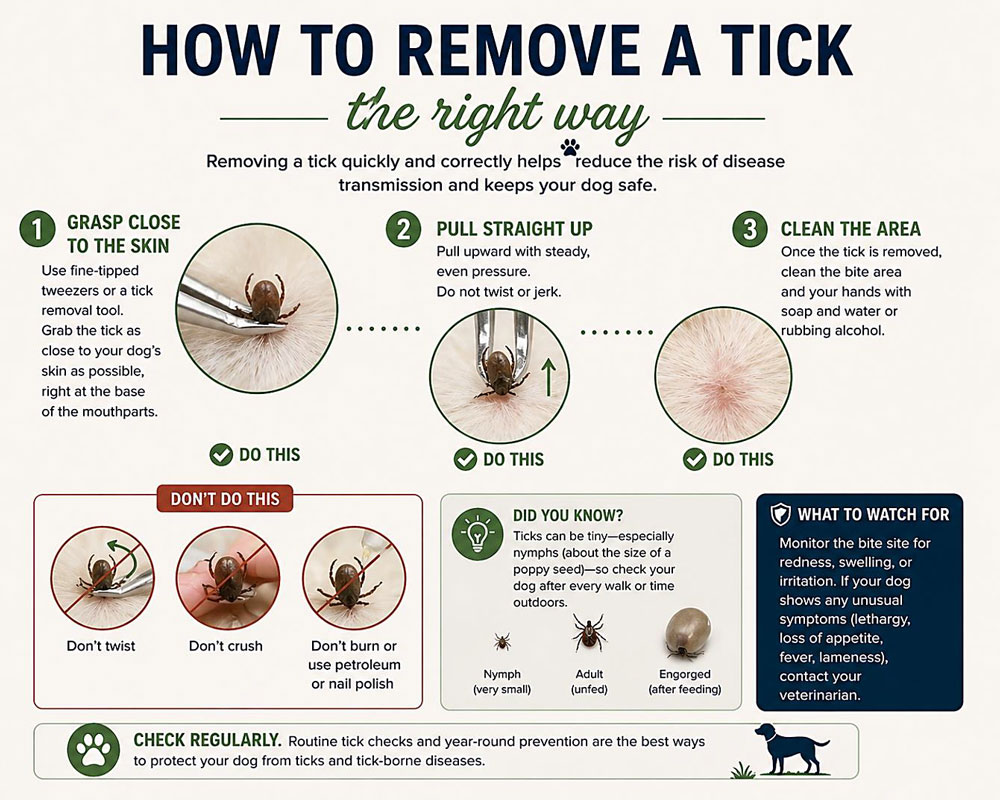
Finding a tick can be stressful, but removal is usually straightforward when done properly. The goal is to remove the tick fully and safely.
- Use tweezers or a tick removal tool
- Grasp the tick as close to the skin as possible
- Pull straight out with steady pressure
- Avoid twisting or crushing the tick
After removal, clean the area and keep an eye on the spot for any irritation. If you’re unsure whether the tick was completely removed or notice any changes, it’s always okay to reach out.
Tick Prevention for Dogs in Wisconsin
While checking for ticks is important, prevention is what makes the biggest difference. Tick activity in Wisconsin can begin earlier than many expect and often lasts into the fall, especially during milder seasons.
A few simple habits can go a long way:
- Use veterinarian-recommended monthly preventatives
- Avoid heavily wooded or overgrown areas when possible
- Perform routine checks after outdoor activity
Ticks are a natural part of the environment, but with the right approach, they don’t have to become a serious problem.
Keeping Your Dog Protected This Season
Ticks are a common part of life in Wisconsin, but with the right approach, they don’t have to become a serious concern.
Regular checks, preventative care, and early removal all play an important role in keeping your dog safe and comfortable throughout the warmer months.
If you’ve found a tick on your dog or want to make sure they’re fully protected, the team at Oak Creek Veterinary Care is here to help you keep your pet protected.
Schedule your dog’s appointment online
Prefer to call or text?
Reach us at 414-301-9113